


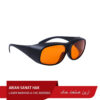
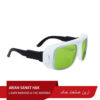
CO2 Laser Protective Glasses By knowing the laser wavelength and the maximum laser output power, you can calculate the optical density (OD) required for your laser device protective glasses. The OD parameters and the wavelength range in which the glasses can be used are printed on the glasses. A higher OD indicates a greater attenuation of the laser light by the glasses lens.
CO2 Laser Protective Glasses
CO2 laser devices generally have a wavelength of 11,000 nm, which is an invisible wavelength to the eye. One of the possible damages that laser light can cause to our eyes is damage to the retina. The human retina lacks any type of pain receptors, so it is recommended that working with a laser device without using protective glasses for a long time may cause possible damage to the retina, and we recommend the permanent use of protective glasses when working with a laser device.
To work with all types of laser devices, protective glasses with OD <6 are used. In the case of CO2 laser devices, special glasses with wavelength specifications of 9000–11000 nm are used.
Features
- Wavelength Protection: These glasses are specifically designed to protect against 10600nm wavelength CO2 lasers.
- Optical Density (OD): This value indicates how much the laser beam is attenuated by the glasses. The higher the OD value, the more protection it provides. Different ODs are required for CO2 lasers of different powers.
- Visible Light Transmission (VLT): This value indicates the amount of visible light that passes through the eyewear. A high VLT provides better vision to the user. Typically, in CO2 laser protective eyewear, the VLT may be slightly lower to provide adequate protection.
- Lens material: The lenses of these glasses are usually made of polycarbonate or glass with special coatings that absorb or reflect the wavelength of the CO2 laser.
- Frame design: The frame of the glasses should be designed to block the laser beam from entering around the eyes. Closed frames or those with side shields are usually a better choice.
- Standards: Make sure your CO2 laser protective eyewear meets internationally recognized standards, such as ANSI Z136.1 or EN207. These standards ensure that the eyewear has undergone rigorous testing and provides the desired protective performance.
Important points
- Determining the power and wavelength of the laser: Before choosing glasses, know exactly what power and wavelength the laser used has.
- Calculate the required OD: Calculate the appropriate OD based on the laser power and the expected duration of exposure. Laser manufacturers and safety equipment suppliers can usually provide guidance on this.
- Check the condition of your glasses: Before each use, check your glasses for any scratches, cracks, or damage. Damaged glasses should not be used.
- Proper storage: Store your glasses in their special box and in a suitable environment to prevent damage.
- Training: All people working with CO2 lasers should be trained on its hazards and how to properly use safety equipment, including protective eyewear.




Reviews
There are no reviews yet.